

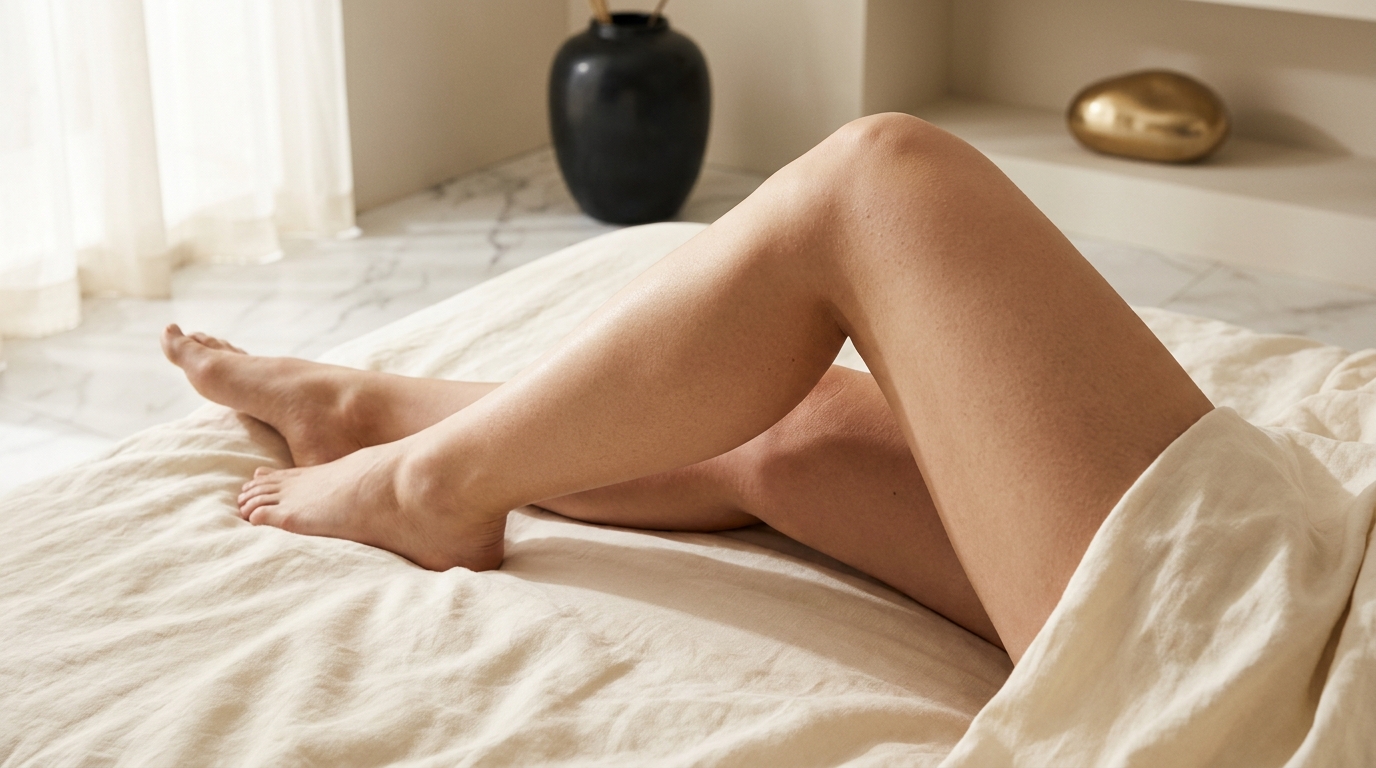
"I exfoliate, I moisturize, I've tried every lotion I can find — and my legs still have those tiny rough bumps and dark dots. Nothing seems to actually work."
If that sounds like your situation, you're not doing anything wrong. You may just be addressing the surface when the problem starts a layer deeper.
Keratosis Pilaris and strawberry skin are two of the most common body skin texture concerns — and they're more connected than most people realize. Understanding what's actually happening at the follicle level is what separates routines that produce real results from ones that just feel like they should be working.
Key Takeaways
- ● Keratosis Pilaris and strawberry skin are not the same condition, but they very commonly occur together.
- ● Both are driven by follicle-level keratin and sebum buildup — not by poor hygiene or dirty skin.
- ● Aggressive scrubbing can make texture worse, not better, by disrupting the skin barrier and triggering more dryness.
- ● A combination of gentle, consistent exfoliation and daily hydration outperforms either approach alone.
- ● Most people begin noticing softer, smoother-looking skin within 2–4 weeks of a consistent routine.
- ● Consistency over intensity is the foundation of any effective KP and texture-improvement routine.
Understanding the Connection Between KP and Strawberry Skin
These two conditions are often confused — or treated as if they're interchangeable. They're not exactly the same thing. But they share the same underlying mechanism at the follicle level, which is why they so often show up together, and why addressing one frequently helps the other.
What Is Keratosis Pilaris?
Keratosis Pilaris — KP for short — is a skin condition where the protein keratin builds up around the hair follicle. Instead of shedding naturally, dead skin and keratin form a small plug at the follicle opening. This produces a rough, bumpy texture most often on the upper arms, thighs, and buttocks. The bumps are typically small, flesh-colored or slightly red, and feel like sandpaper to the touch.
KP is extremely common — roughly 40% of adults have some form of it. It's genetic, it's not contagious, and it's not caused by anything you're doing wrong. But it can improve significantly with the right consistent routine.
What Is Strawberry Skin?
"Strawberry skin" is a casual term for the look of darkened, enlarged follicle openings — especially on the legs — that visually resembles the surface of a strawberry. The dark dots are caused by oxidized sebum, dead skin, or keratin that has become trapped in the follicle opening and darkened over time.
It's most common on the legs, inner thighs, and bikini line — areas where friction, repeated hair removal, and chronic dryness all compound the problem.
Why Do KP and Strawberry Skin Happen Together?
The shared mechanism is follicle-level buildup. With KP, a keratin plug forms around the hair follicle. With strawberry skin, sebum and dead skin clog and darken the follicle opening. In both cases, the result is a rough, textured, uneven-looking surface — just with slightly different drivers at the root.
For someone with KP on their thighs, that same keratin-prone skin often shows strawberry-skin-style darkening at the same follicle openings. The patterns overlap, the root cause is similar, and effective routines for one tend to help the other.
Common Causes of KP and Strawberry Skin
Keratin Buildup at the Follicle
The primary driver of KP is the overproduction of keratin — the same protein that makes up your nails and hair. When it accumulates around the follicle faster than it sheds, a plug forms. That plug creates the characteristic rough bump on the surface and can also trap sebum, worsening the appearance of strawberry-skin-style darkening at the same follicle.
Chronic Dryness and a Compromised Skin Barrier
Dry skin doesn't shed dead cells evenly. Instead, they accumulate and stick together — especially at the follicle opening, where you need the surface to stay clear. This is why KP and strawberry skin tend to look worse in winter, in dry climates, and on skin that hasn't been consistently moisturized. Hydration is not just a comfort measure — it's a functional part of how skin clears itself.
Friction and Repeated Hair Removal
Shaving, waxing, and friction from tight clothing all contribute to follicular disruption. Each shave can irritate the follicle edge and, on skin that's already prone to buildup, create a cycle of darkening and inflammation. Repeated over time, this deepens the strawberry-skin appearance and can make KP bumps more inflamed and visible.
Over-Scrubbing
This is the one most people don't expect. Aggressive physical scrubbing creates microtears in the skin's surface, triggers an inflammatory response, and actually disrupts the barrier that normally helps regulate dead cell shedding. Many people with KP and strawberry skin have been scrubbing hard for years with little improvement — because intensity is not the variable that matters. Consistency and gentleness are.

Featured Product
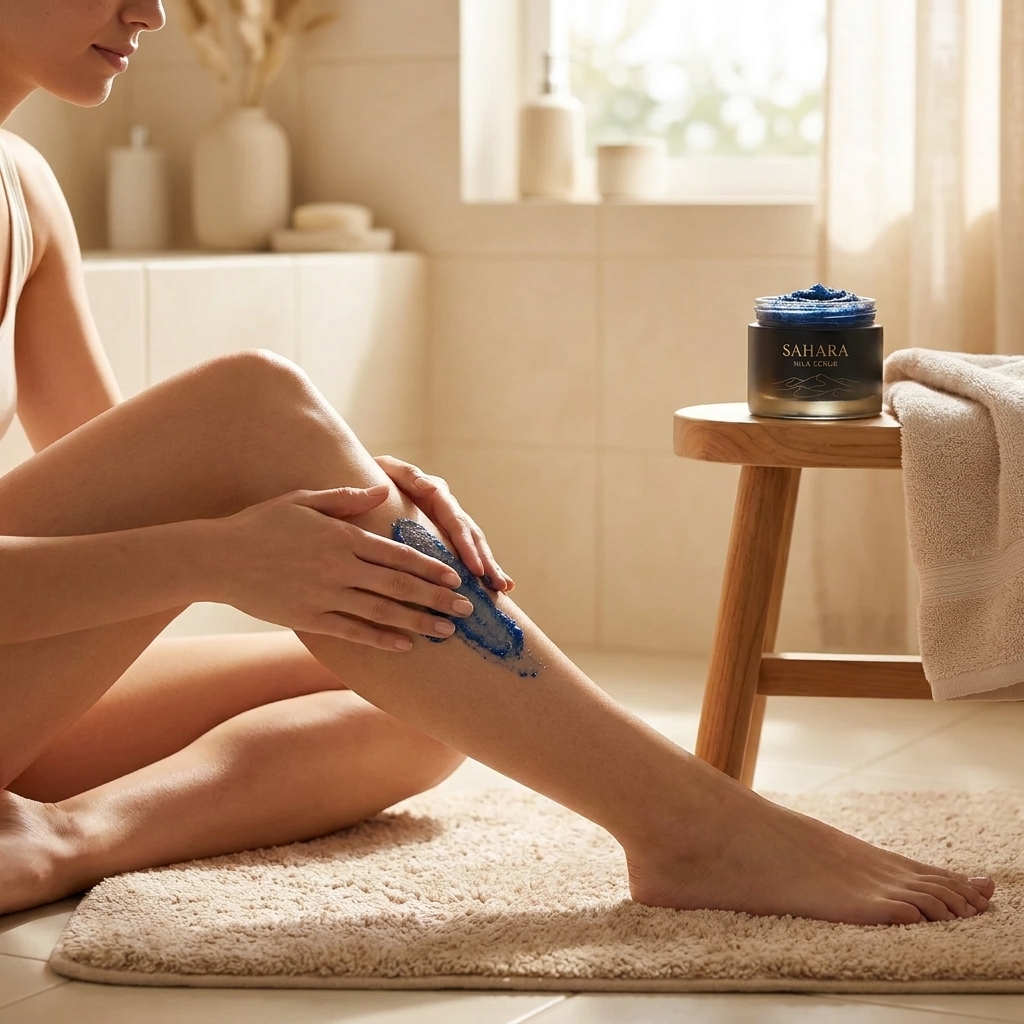
Sahara Nila Scrub
Formulated to gently lift dead skin buildup, help improve the appearance of rough texture and dark follicles, and leave skin looking smoother and more even. Designed for face and targeted body areas including underarms, elbows, and knees.
Shop Nila ScrubThe Sahara Nila Ritual
Stop Scrubbing Harder. Start Treating Smarter.
The Sahara Nila Scrub and Nila Body Mask are designed to gently clear follicular buildup, help improve the appearance of rough texture and uneven body tone, and leave skin looking smoother and more radiant with consistent use — not just temporarily.
Brighten · Smooth · Protect
Shop the Nila Body RitualA Step-by-Step Routine for KP and Strawberry Skin
This isn't about doing more. It's about doing the right things in the right order, consistently. Here's the framework:
Cleanse Gently — Don't Strip
Start with a gentle cleanser that clears the skin without stripping moisture. Harsh, foaming body washes that leave skin feeling tight after rinsing are working against you. The Nila Soap is designed for daily face and body cleansing while supporting your skin barrier.
Exfoliate 2–3 Times Per Week (Not Daily)
Regular, moderate exfoliation keeps follicle openings clear and helps skin shed dead cells properly — the root issue behind both KP and strawberry skin. Use the Nila Scrub 2–3 times per week, not daily. Over-exfoliating disrupts your barrier and can worsen both conditions.
Apply a Treatment Mask After Exfoliating
After exfoliation, skin is primed to receive active ingredients more effectively. Apply the Sahara Nila Body Mask to help address the look of dark follicle openings, rough patches, and uneven tone — especially on the thighs, knees, and any area where KP and strawberry skin are most visible.
Moisturize Immediately — Every Time
This is non-negotiable. Apply moisturizer while skin is still slightly damp after rinsing. Skipping this step counteracts everything else you've done. For dry or KP-prone skin, richer formulas that truly lock in hydration work best.
Give Your Skin Time and Stay Consistent
KP and strawberry skin don't appear overnight, and they won't clear overnight either. A consistent 4–8 week routine is the standard benchmark for visible texture improvement. The people who see the best results are those who stay steady, not those who do the most.

Pairs With the Nila Scrub
Sahara Nila Body Mask
Designed for the body — including inner thighs, underarms, knees, elbows, and bikini line. Helps improve the appearance of dark spots, uneven body tone, and rough-looking texture with consistent use.
Shop Nila Body MaskWhat to Expect: A Realistic Timeline
Skin texture doesn't change overnight — and anyone promising otherwise is not giving you a realistic picture. Here's what a well-executed routine typically looks like:
Weeks 1–2
Skin may feel softer after cleansing and exfoliation. This is your barrier beginning to stabilize. You may notice less roughness to the touch, even if the visual appearance hasn't dramatically shifted yet. This is normal — keep going.
Weeks 4–8
This is where most people notice visible improvement — fewer prominent bumps, lighter-looking dark follicle openings, and a more even surface texture. Consistency over the previous weeks is what drives this shift.
Weeks 8–12 and Beyond
Continued improvement in overall body skin tone and texture. Skin looks smoother, more even, and more polished. At this stage, the goal is maintenance — keeping what you've built by not abandoning the routine.
Common Mistakes That Slow Your Progress
- Scrubbing too hard or too often. More friction does not mean faster results. It means more barrier disruption, more inflammation, and often worse texture.
- Skipping moisturizer after exfoliating. Exfoliation without hydration creates dry, irritated skin — which looks worse and reacts worse to your next routine step.
- Inconsistent use. Using a product once, seeing no dramatic change, and abandoning it. KP and strawberry skin require weeks of consistent use, not occasional treatment.
- Shaving without prep. Dry shaving on already rough or bumpy skin aggravates follicles and adds to the appearance of strawberry skin. Prep with warm water and moisturize immediately after.
- Expecting an overnight transformation. The goal is steady improvement over weeks — not a single-use revelation. Manage expectations and trust the process.
Frequently Asked Questions
Is Keratosis Pilaris the same as strawberry skin?
They're not the same, but they're closely related. KP is a specific condition where keratin builds up around the follicle, creating rough bumps. Strawberry skin refers to the appearance of darkened, enlarged follicle openings. Many people with KP — especially on the thighs — also have strawberry skin in the same areas because the follicular buildup mechanism overlaps.
Can KP go away completely?
KP is a genetic condition, which means it can't be "cured." But it can be managed very effectively. Many people see their KP improve significantly — to the point of being barely noticeable — with a consistent exfoliation and hydration routine. Results vary, but the skin texture can look dramatically smoother with steady care.
Does shaving make strawberry skin worse?
Poor shaving technique can, yes. Dry shaving, dull blades, and shaving without moisturizing afterward all irritate the follicle and contribute to the appearance of dark dots and roughness. Proper prep, a clean blade, and immediate moisturization make a real difference.
How often should I use a body scrub for KP?
2–3 times per week is generally the effective range for most people. Daily exfoliation often does more harm than good — it disrupts the skin barrier and can worsen dryness, which makes KP look worse. Consistent, moderate exfoliation over time is the goal.
Can I use the Nila Body Mask on my thighs for KP?
Yes. The Nila Body Mask is designed for body use, including the thighs — one of the most common areas for both KP and strawberry skin. Apply after cleansing and exfoliating for best results. Patch test first if your skin is sensitive.
How long before I see results?
Most people notice softer, smoother-feeling skin within the first 1–2 weeks. Visible improvement in texture appearance and follicle darkening typically takes 4–8 weeks of consistent use. Results vary based on skin type, severity, and how closely you follow a routine. Consistency is the deciding factor.
Final Thoughts
Keratosis Pilaris and strawberry skin are two of the most persistent body skin concerns — not because they're impossible to improve, but because most people approach them with the wrong tools and unrealistic timelines.
The fix isn't more aggressive. It's more consistent. A steady routine that clears follicular buildup, restores moisture, and gives your skin time to respond is what actually moves the needle — not occasional intensive treatments that disrupt more than they help.
Sahara's Nila Scrub and Nila Body Mask are built around this principle: gentle, purposeful, and consistent. Brighten. Smooth. Protect. That's the Sahara approach — and it's the one that works.