


Skin Education · Sun Damage
Why Sun Spots Keep Coming Back — And How to Finally Break the Cycle
"I stay out of the sun, I use SPF, I've tried the brightening products — so why does my skin still look patchy, dull, and spotted?"
Key Takeaways
- Sun spots are caused by years of UV exposure triggering excess melanin production — and even after you start protecting your skin, the existing damage doesn't simply undo itself.
- Sun-damaged skin isn't just about visible spots. Dullness, rough texture, and an overall uneven, tired-looking complexion are all signs of cumulative UV exposure.
- SPF is the single most important step — but it prevents new damage, not existing. You need a brightening ritual to help improve what's already there.
- Surface buildup (dead skin cells, excess oil, environmental debris) sits on top of sun-damaged areas and makes them look darker and more pronounced than they actually are.
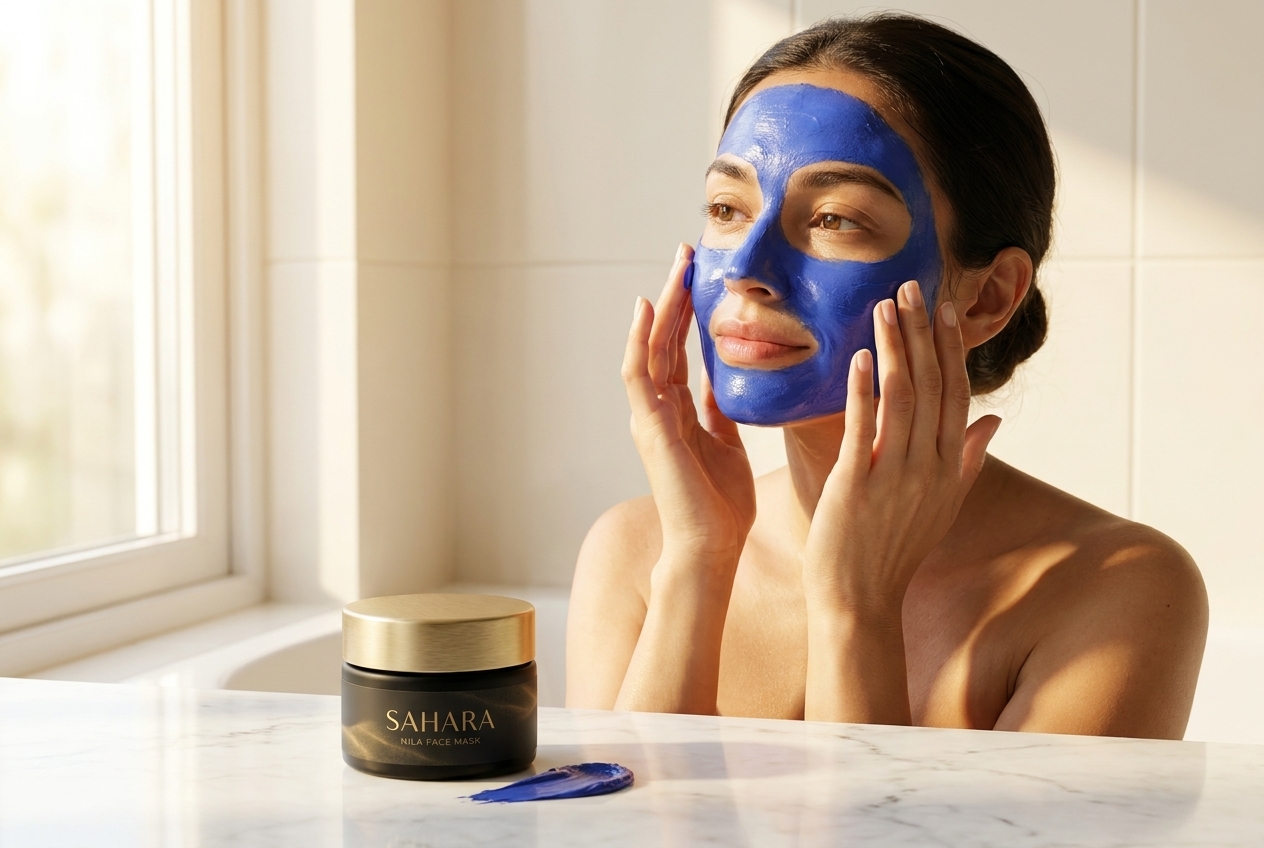
- The Sahara Nila Face Mask helps clear surface buildup and supports a more radiant, even-looking complexion — a key first step in any sun-spot ritual.
- Consistency is everything. Sun damage accumulated over years won't improve after one week of treatment — but it will respond to a steady, protective, brightening routine.
If you've noticed small dark patches on your cheeks, forehead, or the bridge of your nose that weren't there a few years ago — you're not imagining things. Sun spots, also called solar lentigines or age spots, are one of the most common and persistent visible signs of UV exposure. And once they appear, they tend to stick around.
The frustrating part is that sun spots can appear even when you think you've been careful. A few years of not wearing SPF consistently, a handful of beach trips without enough reapplication, or simply living in a sunny climate — it all adds up over time in ways that don't show up on your face until years later.
But here's what most people don't realize: understanding why sun spots keep coming back is the key to doing something about them. And the answer has less to do with the products you're using, and more to do with the cycle your skin is stuck in.
What Are Sun Spots and Why Do They Form?
Sun spots are areas of the skin that have darkened due to concentrated melanin production triggered by repeated UV exposure. Melanin is your skin's natural defense against UV rays — when UV light hits the skin, melanin-producing cells (melanocytes) activate and produce pigment to help absorb and scatter the radiation.
In healthy, protected skin, melanin production is relatively even and dispersed. But years of UV exposure without adequate protection causes melanocytes in certain areas to become overactive — producing far more pigment than neighboring cells. The result is a cluster of darker, flat discoloration that we recognize as a sun spot.
Where they tend to show up:
Sun spots most commonly appear on areas that receive consistent, cumulative UV exposure:
- Face — especially cheeks, temples, nose bridge, and forehead
- Hands and forearms
- Shoulders and décolletage
- Upper back
- Any area that's regularly exposed to sun without protection
They're most common in adults over 30, but people with lighter skin tones and those who spent significant time outdoors without sun protection in their teens and twenties often see them appear earlier. Darker skin tones can also develop sun spots, though they may appear as deeper brown patches or a general unevenness rather than the sharply defined spots typically associated with sun damage.
Why Sun-Damaged Skin Looks the Way It Does
Sun spots are the most obvious sign of UV damage — but they're rarely the only one. Cumulative sun exposure affects the skin in several interconnected ways that all contribute to a dull, uneven, prematurely aged-looking complexion:
Uneven melanin distribution
Beyond distinct spots, UV exposure causes patchy, generalized unevenness across the whole face. Skin that looks "blotchy" or inconsistent in tone — even without defined spots — is often a sign of this diffuse UV-triggered melanin overproduction.
Slowed cell turnover
Healthy skin naturally sheds old cells and replaces them with fresh ones. UV damage slows this process, meaning discolored cells stay on the skin's surface longer, accumulate as buildup, and make the complexion look dull and flat rather than bright and radiant.
Rough, uneven texture
Sun-damaged skin often develops a slightly rough, uneven surface texture — a result of damaged collagen structure and the buildup of dead, slow-to-shed skin cells. This texture makes even foundation difficult to apply evenly and can make the skin look older than it is.
Overall dullness and loss of glow
When sun-damaged skin is covered in a layer of slow-shedding cells, excess surface oil, and environmental buildup, light doesn't reflect off the skin the way it should. The result is a complexion that looks tired, flat, and lackluster — even when you've had a full night's sleep.
The Cycle That Keeps Sun Spots Visible
Here's the part most people miss — and why sun spots feel so stubborn even when you're trying to treat them.
Step 1: UV exposure activates melanin overproduction
Years of sun exposure — even indirect, even through windows — gradually trains overactive melanocytes in specific areas to produce more pigment than normal. Once this overactivity is established, it doesn't simply stop when you start wearing SPF.
Step 2: Slowed cell turnover traps pigment near the surface
Sun-damaged skin sheds cells more slowly than healthy skin. This means the discolored, pigmented cells stay near the top of the skin longer — keeping dark spots visible and making them harder to fade even with brightening products.
Step 3: Surface buildup amplifies the appearance of spots
Dead skin cells, excess oil, and environmental debris accumulate on the skin's surface and settle into areas of discoloration. This adds visual depth to spots, making them appear darker and more defined than they actually are. Brightening serums applied on top of this buildup sit on the surface layer instead of reaching the pigmented cells underneath.
Step 4: Incidental UV exposure restimulates the cycle
Even with SPF, small amounts of UV exposure — driving, sitting near windows, brief outdoor moments — can keep already overactive melanocytes slightly stimulated. Without a consistent brightening ritual running alongside consistent sun protection, it's very hard to outpace the cycle.
The Sahara Nila Face Mask

Formulated with Moroccan Blue Nila and kaolin clay, the Nila Face Mask helps clear surface buildup, absorb excess oil, and reveal skin that looks brighter, more even, and refreshed. It's a key part of a sun-spot ritual — clearing the path so your brightening routine can actually work. Use 2–3 times per week alongside daily SPF.
Shop the Nila Face MaskBuilding a Sun Spot Ritual That Actually Works
The goal isn't to find one magic product. It's to build a routine that clears the surface, supports brighter-looking skin, and most importantly — stops the cycle from restarting. Here's how to structure it:
Cleanse — remove every trace of sunscreen and buildup
Evening cleansing is especially important for sun-spot-prone skin. Sunscreen residue left on skin overnight combined with surface oils and debris creates exactly the kind of buildup that makes dark spots look worse. Use a gentle cleanser that removes everything without stripping the skin barrier.
Use the Nila Face Mask 2–3x per week
Apply an even layer to clean, dry skin. Leave on for 10–15 minutes. The kaolin clay and Moroccan Blue Nila formula helps absorb excess oil and surface buildup, leaving skin looking cleaner, more even, and brighter. This is the clearing step that makes everything else in your routine work better.
Moisturize immediately after rinsing
Sun-damaged skin often has a compromised barrier — it loses moisture faster and can feel dry or tight even after cleansing. Follow every mask session with a nourishing moisturizer to help seal in hydration and keep the skin barrier supported.
SPF 30+ every single morning — without exception
This is not optional if you're working on sun spots. Every moment of unprotected UV exposure stimulates the exact melanocytes that are causing your spots. No brightening ritual can outpace daily unprotected sun exposure. Apply SPF 30 or higher every morning, reapply if you're spending time outdoors, and consider a wide-brimmed hat for extended time in direct sun.
What to Realistically Expect Over Time
Results vary. Individual skin type, depth of pigmentation, and SPF adherence all significantly affect outcomes. Patch test before use. This content is informational and does not constitute medical advice.
Common Mistakes That Keep Sun Spots Coming Back
What most people get wrong when trying to fade sun damage:
Frequently Asked Questions
Can sun spots actually be improved with skincare?
Yes — with the right routine and consistent SPF, the appearance of sun spots can be visibly improved over time. The key is clearing surface buildup (so brightening steps actually reach the skin), supporting a more even-looking complexion, and stopping new UV damage from occurring. Results vary by person, depth of pigmentation, and how consistently SPF is used.
What's the difference between sun spots and other dark spots?
Sun spots (solar lentigines) are flat, well-defined areas of discoloration caused specifically by cumulative UV exposure. Other dark spots — like post-inflammatory hyperpigmentation from breakouts — are caused by inflammation. Both involve excess melanin production, but sun spots tend to be more stable and persistent because the melanocytes in those areas have become chronically overactive from years of UV stimulation.
How often should I use the Nila Face Mask for sun-damaged skin?
2–3 times per week is the sweet spot for most skin types. If your skin is on the sensitive side or your barrier feels compromised (tight, reactive, easily red), start once a week and build from there. On days you don't mask, keep your routine focused on gentle cleansing, moisturizing, and SPF.
Do I need to wear SPF if I'm already using a brightening mask?
Yes — absolutely. The face mask helps improve the appearance of existing discoloration. SPF prevents new UV damage from forming and keeps existing melanocytes from being restimulated. Without SPF, any progress made by your brightening routine can be undone by continued daily UV exposure. They work together, not instead of each other.
My sun spots have been there for years — is it too late to do anything?
It's not too late. Older sun spots tend to take longer to respond than newer ones, but consistent brightening and surface-clearing routines can still help improve their appearance over time. The most important thing is protecting the skin going forward — stopping new damage while supporting the visible improvement of what's already there.
Is the Nila Face Mask safe to use on sun-sensitive or reactive skin?
If your skin is reactive or particularly sun-sensitive, patch test first — apply a small amount to your inner forearm and wait 24 hours. Start with a shorter application time and once-per-week frequency. Avoid applying to actively irritated or sunburned skin. And always follow up with moisturizer after rinsing.
Final Thoughts
Sun spots are one of the most honest things your skin can tell you — they're a record of every summer, every walk, every moment of unprotected exposure accumulated over years. That doesn't mean they're permanent. It means they need a different kind of approach than a quick-fix spot treatment.
What works is building a routine that clears the path, supports a brighter-looking complexion, and — most importantly — commits to daily protection. The Nila Face Mask is one part of that equation. SPF is the other. Together, they give your skin what it needs to start looking more even, more radiant, and more like you.
Start with the routine. Protect your progress. Give it time.
Brighten · Smooth · Protect