


Skin Education · Hyperpigmentation
Why Your Dark Spots Keep Coming Back — And What Your Skin Actually Needs
"I've tried every brightening serum on the market. I do everything right. So why does my skin still look uneven and patchy every single morning?"
Key Takeaways
- Dark spots and uneven skin tone are caused by excess melanin production — often triggered by sun, friction, inflammation, or post-blemish healing.
- Most brightening products only target the surface. Real improvement requires consistent treatment at the follicle and skin-barrier level.
- Hyperpigmentation on the face often looks different from body discoloration — but the root cause is similar: melanin overproduction and slow cell turnover.
- Exfoliation alone doesn't fix dark spots. You need to combine gentle removal of dull buildup with ingredients that help slow down the cycle.
- The Nila Face Mask works by helping absorb excess buildup, supporting a brighter-looking surface, and revealing skin that looks more even over time.
- Consistency — not one-off treatments — is what separates skin that improves from skin that stays stuck. Results vary, but the routine matters most.
You've probably done your research. You know dark spots are stubborn. You've invested in vitamin C serums, tried niacinamide, maybe even bought a pricey treatment or two. And yet — when you look in the mirror every morning, the dark spots are still there. Maybe a little lighter. Maybe not at all.
You're not imagining it. Hyperpigmentation and dark spots are genuinely difficult to address — and the reason most products feel like they're not working isn't because your skin is hopeless. It's because most products are approaching the problem the wrong way.
This post breaks down what's actually happening under the skin, why dark spots keep coming back, and what a real skin-brightening ritual looks like — the kind that works with your skin instead of against it.
What Are Dark Spots, Really?
Dark spots — whether from sun exposure, old breakouts, friction, or hormonal shifts — are the result of your skin producing too much melanin in one localized area. Melanin is the pigment that gives skin its color, and your body produces it as a protective response to stress, inflammation, UV exposure, or injury.
The problem is that your skin doesn't always know when to stop. Once the initial trigger is gone, the melanin-producing cells (melanocytes) can stay in an overactive state, continuing to deposit excess pigment long after the original cause has healed. That's why a pimple from six months ago can still leave a mark today.
Types of discoloration that fall under this umbrella:
Post-inflammatory hyperpigmentation (PIH) — marks left after a breakout, ingrown hair, or irritation. Sun spots — areas that have darkened from UV exposure over time. Melasma-looking patches — hormonally influenced, usually appearing on cheeks, forehead, or upper lip. Friction discoloration — darker areas where skin experiences repeated rubbing (underarms, bikini line, inner thighs, neck).
The skin on your face tends to be more reactive — meaning it produces melanin more easily in response to inflammation. That's why breakout marks, picked blemishes, and even harsh product use can all leave lasting discoloration.
Why Most Brightening Products Don't Solve It
Here's the frustrating truth: most brightening serums and spot treatments target one very specific part of the problem. They either try to block melanin production (using ingredients like vitamin C or kojic acid) or they exfoliate the surface to remove discolored skin cells faster.
Both of these approaches have real merit. But they're rarely enough on their own — especially if:
- Your skin is still experiencing new triggers (sun, breakouts, friction, stress)
- Your skin barrier is compromised, making treatment less effective
- Surface buildup — dry skin cells, oil, and debris — is sitting on top of the area you're treating
- You're not exfoliating consistently enough to clear the way for active ingredients to absorb
In other words: if your skin's surface is clogged with buildup, your serum is fighting through a barrier before it even reaches the spot it's supposed to treat. And if you're still getting new inflammation (from breakouts, sun, or shaving), you're adding new dark spots faster than your brightening routine can keep up.
The Cycle That Keeps Dark Spots Stuck
Step 1: A trigger creates inflammation
Something stresses the skin — a breakout, a harsh product, too much sun, repeated friction. The body responds with inflammation and sends melanin-producing cells into overdrive.
Step 2: Excess melanin deposits in the skin
The pigment settles into the upper layers of skin, creating a visibly darker patch. This is the spot you're now trying to fade.
Step 3: Dull buildup covers the area
As dead skin cells accumulate on the surface, the discolored area looks even darker and more pronounced. Moisturizer and serums sit on top of this buildup rather than reaching the pigmented cells underneath.
Step 4: New triggers restart the cycle
Before your current spot has fully improved, a new breakout, a day without SPF, or friction from clothing triggers another melanin response. The cycle continues.
The only way to break the cycle is to address all of it — not just the surface, and not just one step at a time.
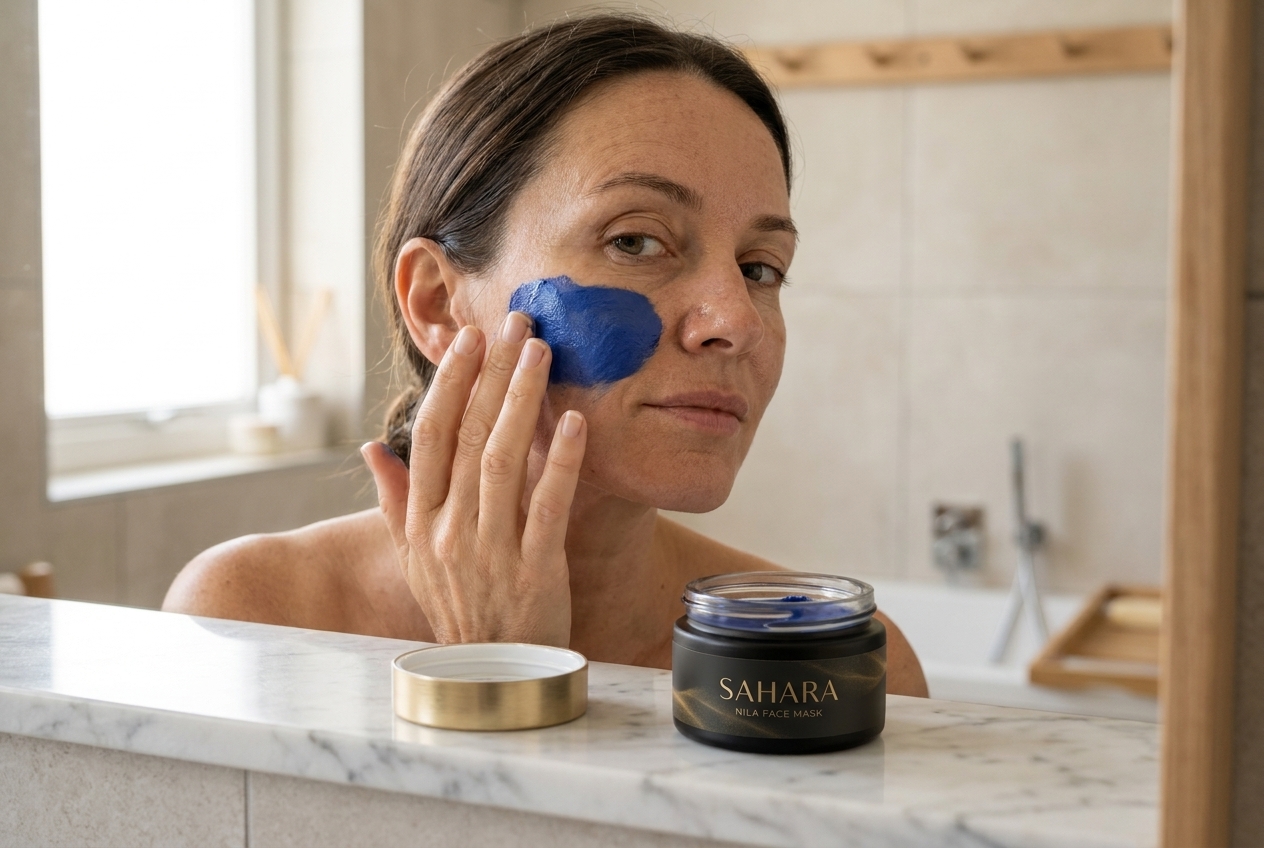
The Sahara Nila Face Mask

Formulated with Moroccan Blue Nila and skin-smoothing kaolin clay, the Nila Face Mask helps remove dull surface buildup, absorb excess oil, and reveal skin that looks brighter, more even, and refreshed. Use 2–3 times per week as part of a consistent brightening ritual.
Shop the Nila Face MaskHow to Build a Real Brightening Ritual
The goal isn't to find a single miracle product. It's to build a consistent routine that removes buildup, treats the area, protects against new triggers, and gives your skin the time it needs to reset. Here's how to structure it:
Cleanse thoroughly — every time
Start with a clean base. Leftover sunscreen, makeup, and oil lock in buildup and prevent any treatment from absorbing properly. A gentle daily cleanser is non-negotiable.
Use your Nila Face Mask 2–3x weekly
Apply an even layer to clean, dry skin. Leave on for 10–15 minutes (less if your skin is sensitive). The kaolin clay and Moroccan Blue Nila formula helps absorb excess oil, clear surface buildup, and support a visibly more even-looking tone over time.
Moisturize immediately after rinsing
After masking, your skin is freshly cleared and more receptive to hydration. Apply a nourishing moisturizer (or the Nila Cream) while skin is still slightly damp to lock in moisture and support your skin barrier.
SPF every single morning — no exceptions
This is the most important step most people skip. UV exposure is one of the top triggers for melanin overproduction. If you're targeting dark spots but skipping SPF, you're directly undoing your own progress. Apply SPF 30+ every morning, rain or shine.
What to Realistically Expect (And When)
Dark spots don't fade overnight. Here's a realistic timeline for what consistent use looks like:
Results vary. Individual skin type, sun exposure habits, and consistency of use all affect outcomes. Patch test before adding any new product to your routine.
Common Mistakes That Stall Your Progress
What's actually keeping your dark spots stuck:
Frequently Asked Questions
Can the Sahara Nila Face Mask help fade dark spots?
The Nila Face Mask is formulated to help improve the appearance of uneven skin tone and the look of dark spots over consistent use. It works by helping clear surface buildup, absorb excess oil, and support a brighter, more even-looking complexion. It is not a spot treatment in the clinical sense — results vary based on skin type and routine consistency.
How is hyperpigmentation different from a regular dark spot?
Hyperpigmentation is an umbrella term for any area where excess melanin causes a darker patch of skin — this includes post-acne marks, sun spots, melasma-looking patches, and friction-related discoloration. Not all dark spots are the same, but they all involve the same underlying mechanism: overactive melanin production in a localized area.
How often should I use the Nila Face Mask for dark spots?
Most people see the best results using it 2–3 times per week. If your skin is sensitive, start with once a week and build up. Consistency over time matters more than frequency — it's better to use it twice a week every week than to use it daily for one week and then stop.
Do I still need a serum if I'm using the Nila Face Mask?
Yes — the face mask is one part of a routine, not the whole routine. Think of it as the deep-cleansing, surface-clearing step that helps your other products work better. A lightweight vitamin C or niacinamide serum used after cleansing (on non-mask days or after masking) can complement the mask nicely. Always follow with moisturizer and SPF.
How long does it take to see results from a brightening routine?
Skin cell turnover takes roughly 28–40 days (longer as we age), which means visible improvement in pigmentation typically becomes noticeable after 4–8 weeks of consistent use. Deeper or older dark spots can take 8–12 weeks or more. Sun protection is the biggest variable — skipping it can cancel progress entirely.
Is the Nila Face Mask safe for sensitive skin?
If you have sensitive skin, patch test first — apply a small amount to your inner forearm and wait 24 hours before using it on your face. Start with a shorter application time (5–8 minutes) and work up from there. Avoid applying to actively irritated, broken, or inflamed skin.
Final Thoughts
Dark spots and hyperpigmentation are frustrating — but they're not permanent. What they require is a routine that's consistent, complete, and patient. Not more products. Not harsher actives. Just the right steps, done regularly, with the one ingredient most people skip: SPF every single day.
The Nila Face Mask isn't magic, and we won't tell you it is. What it does is help your skin look cleaner, brighter, and more even — and it does that by working with your skin's natural renewal process rather than against it.
Start simple. Stay consistent. Protect the progress you make. Your skin will show you what it's capable of.
Brighten · Smooth · Protect