

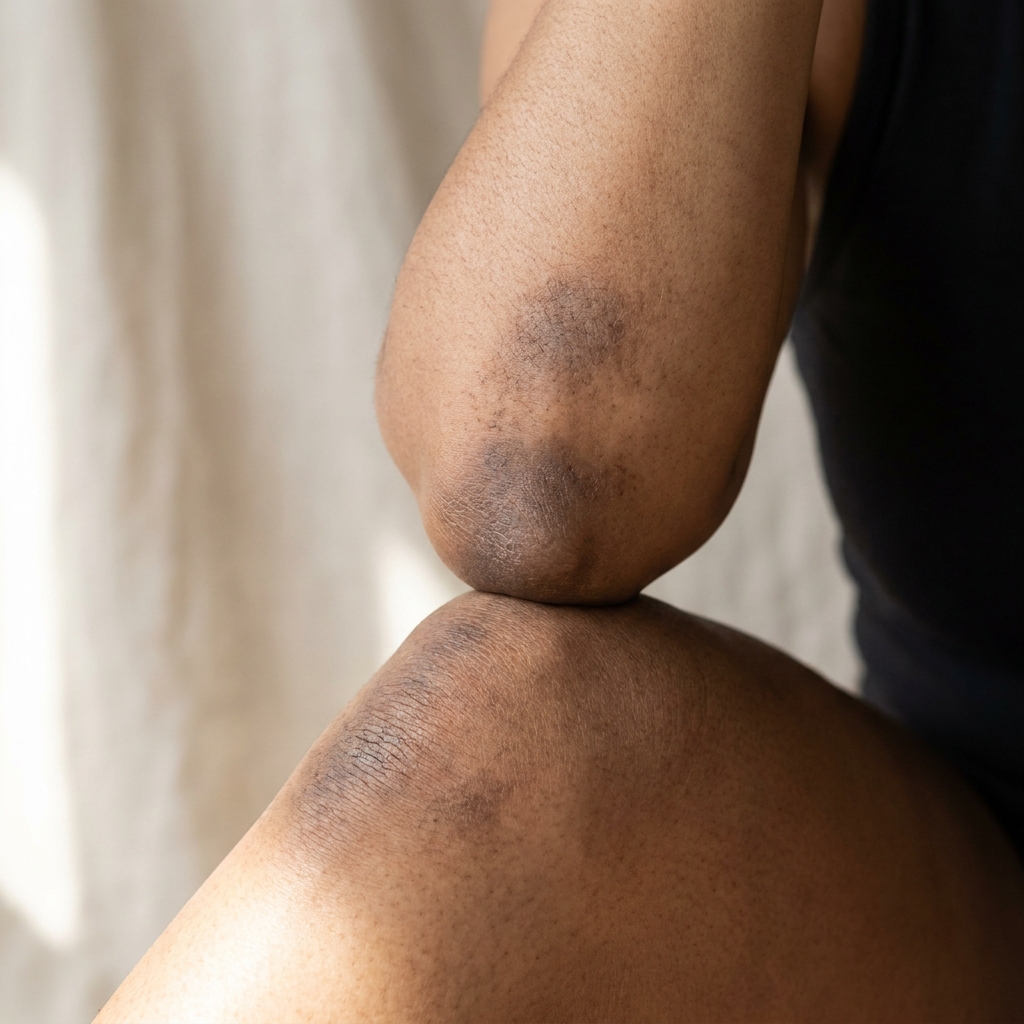
Skin Education · Body Care
Why Your Elbows and Knees Look Dark — And How to Actually Smooth Them Out
"I moisturize every day. I exfoliate when I remember. So why do my elbows and knees still look dark, rough, and completely different from the rest of my skin?"
Key Takeaways
- Dark elbows and knees are almost universally caused by the same root issue: chronic pressure and friction on skin that has very few oil glands — meaning it dries out faster and darkens more easily than anywhere else on the body.
- The skin on elbows and knees is structurally thicker than surrounding skin, which means dead skin cells accumulate faster and build up into rougher, darker-looking patches over time.
- Simply moisturizing over a layer of buildup doesn't work — the moisture sits on top of dead skin rather than reaching the living skin underneath.
- Consistent clearing of surface buildup is the critical missing step for most people — and it's what makes the difference between skin that stays rough and dark versus skin that gradually softens and brightens.
- The Sahara Nila Body Mask helps lift surface buildup from dry, thickened skin on elbows and knees and supports a visibly softer, more even-looking appearance over time.
- Results take consistent, repeated effort — but the skin on elbows and knees does respond. Most people notice a visible difference in texture and tone within 4–8 weeks of regular use.
Dark elbows and knees are one of those body skin concerns that most people have quietly lived with for years. Not painful, not urgent — just persistently there, making you hesitate before wearing a sleeveless dress or cropped pants. You've probably moisturized them. You've maybe tried a scrub. And they've probably looked exactly the same.
The reason they're so stubborn isn't a mystery — it's actually very predictable once you understand what makes elbow and knee skin different from the rest of your body. And once you understand that, it becomes clear why standard moisturizing isn't enough, and what actually needs to happen first.
What Makes Elbow and Knee Skin Different
The skin covering your elbows and knees isn't the same as the skin on the rest of your arm or leg. It's structurally different in several ways — and those differences are exactly what make it prone to darkening and roughness.
It's thicker — by design
The epidermis (the outermost layer of skin) is significantly thicker at the elbows and knees than on surrounding skin. This thickening is the body's natural response to the pressure and friction those joints experience every time you bend, kneel, sit, or lean on them. Thicker skin means more cell layers — and more layers means a deeper accumulation of dead skin cells before they shed naturally.
It has very few oil glands
Oil glands (sebaceous glands) are responsible for naturally moisturizing the skin's surface by producing sebum. The elbow and knee skin has an exceptionally low density of oil glands compared to almost anywhere else on the body. This means the skin in these areas is structurally prone to dryness — it cannot moisturize itself the way other areas can. Without consistent external hydration and clearing of the surface layer, it dries out, cracks, and accumulates thick buildup.
It experiences constant mechanical stress
Every time you bend your elbow or knee, the skin there stretches and compresses. Every time you rest your elbow on a desk, lean on your knees, or kneel on a hard surface, you're applying pressure directly to those cells. Over time, this chronic low-level stress triggers melanin overproduction — the same protective darkening response the skin uses in any area subjected to repeated friction or pressure.
Dead skin accumulates faster and sheds slower
Because the skin is thicker, drier, and more structurally dense in these areas, the natural cell turnover process — where old cells shed and fresh ones replace them — is slower and less efficient. Dead skin builds up in visible layers, creating that characteristic dull, rough, grey-looking surface texture that makes elbows and knees look darker than the surrounding skin even when there isn't significant true pigmentation change underneath.
Why They Stay Dark Even When You Moisturize
Here's the part most people run into: moisturizing elbows and knees feels like the obvious fix. But moisturizer applied to a thick layer of built-up dead skin doesn't reach the skin that needs it. It sits on the surface, creates temporary softness, and then evaporates — leaving the buildup layer just as thick and the skin just as dark underneath.
Think of it like watering a plant through a layer of gravel. The water might sit there for a while, but it's not reaching the roots. The dead skin buildup on elbows and knees acts as a barrier between your moisturizer and your actual skin — which is why clearing that buildup has to come first.
The Cycle Keeping Elbows and Knees Dark
Step 1: Structural dryness creates a buildup foundation
Because elbow and knee skin has so few oil glands, it starts from a baseline of structural dryness. Without regular external clearing, this dryness creates a permanent foundation for dead skin accumulation — cells pile up faster than the skin can naturally shed them.
Step 2: Pressure and friction deepen the darkening
Daily activities — resting on elbows while reading or working, kneeling, bending repeatedly — apply constant mechanical stress to these joints. Over weeks and months, this stress triggers melanin overproduction, gradually deepening the appearance of discoloration in the pressure zones.
Step 3: Buildup amplifies the visual effect
The accumulated dead skin layer sits on top of any underlying discoloration and adds its own visual darkness — making the area look significantly darker than the actual skin tone beneath. It also creates a rough, uneven surface texture that catches shadows and visually deepens the appearance of the area.
Step 4: Moisturizer can't penetrate — so nothing changes
Without clearing the buildup first, any brightening or moisturizing product applied to the area works against this barrier rather than through it. Results are minimal, and within a few days the skin looks exactly as it did before.
The Sahara Nila Body Mask

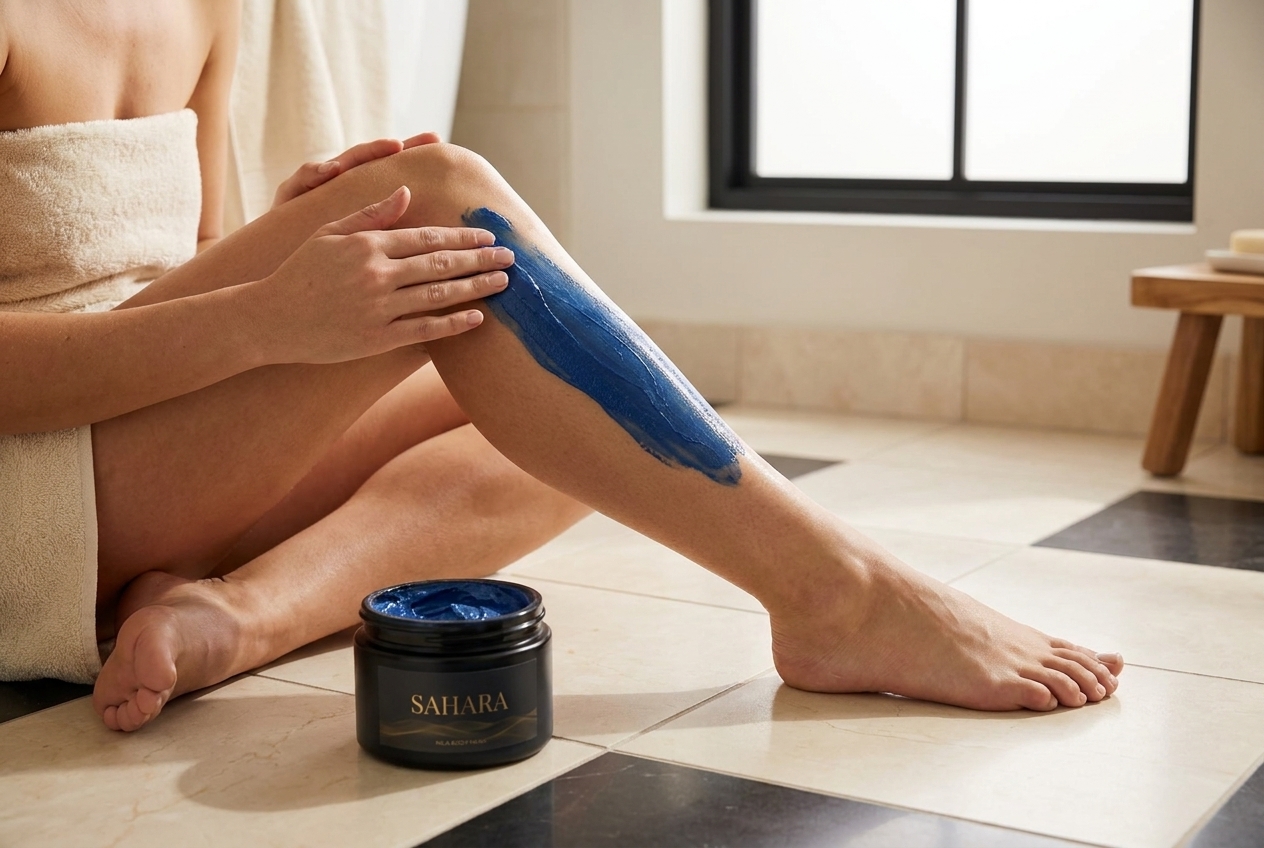
Formulated with Moroccan Blue Nila and body-smoothing clays, the Nila Body Mask is designed for exactly the areas that need the most help — thick, dry, buildup-prone skin on elbows, knees, and other body zones where standard skincare doesn't reach. It helps lift surface buildup and support a visibly softer, more even-looking appearance with consistent use.
Shop the Nila Body MaskBuilding a Routine That Actually Works for Elbows and Knees
The approach for elbows and knees is the same as any stubborn body area — but the order of steps matters more here than almost anywhere else, because of how thick and dry the skin is. Here's how to do it right:
Soften the skin before you treat it
The best time to apply the body mask to elbows and knees is after a warm shower or bath, when the skin is already softened and more receptive. Warm water helps loosen the dead skin layer and opens the skin slightly, making the clearing step significantly more effective than applying to dry, cold skin.
Apply the Nila Body Mask to elbows and knees
Apply a generous layer of the Nila Body Mask directly to the elbow and knee area. Leave on for 10–15 minutes. The clay-based formula works to absorb surface buildup and residue while the Moroccan Blue Nila helps support a brighter-looking, more even appearance. Use 2–3 times per week for best results.
Rinse thoroughly and pat dry — don't rub
After rinsing, pat the area dry with a towel rather than rubbing. Rubbing dry skin on elbows and knees creates friction — which is one of the main triggers for the melanin overproduction that caused the darkening in the first place. Pat gently and move immediately to the next step.
Moisturize immediately while skin is still slightly damp
This is the step most people delay — and it makes a significant difference. Applying moisturizer to slightly damp skin (within 60 seconds of patting dry) traps the moisture from your shower and dramatically improves how deeply it absorbs. After clearing the surface buildup with the mask, the moisturizer finally has direct access to the actual skin it needs to reach. Use a thick, nourishing body cream or oil for elbows and knees specifically.
What to Realistically Expect
Results vary. Individual skin type, starting discoloration, and routine consistency all affect outcomes. Patch test before use. Avoid applying to broken or actively irritated skin.
Common Mistakes That Keep Elbows and Knees Dark
What most people get wrong:
Frequently Asked Questions
Why are my elbows and knees so much darker than the rest of my skin?
The combination of thicker skin, very few oil glands, and constant pressure and friction makes elbows and knees structurally prone to darkening. The thick skin accumulates dead cells faster, the dryness deepens the rough appearance, and the friction stimulates melanin production over time. It's not a hygiene issue or a skin type problem — it's a structural reality of how those joints are built.
Will the Nila Body Mask help with dark elbows and knees?
Yes — the Nila Body Mask is specifically designed for body areas with buildup-prone, discolored skin, including elbows and knees. It helps lift surface buildup and support a more even-looking, brighter appearance with consistent use. It works best as part of a routine that includes clearing the surface before moisturizing. Results vary.
How often should I use the body mask on elbows and knees?
2–3 times per week is the recommended starting frequency for most skin types. Because elbow and knee skin is thicker and more resilient than facial skin, it tolerates regular use well. If your skin feels sensitive or reactive in these areas, start with once a week and build up from there.
Is it safe to use the Nila Body Mask on cracked or very dry elbows?
If the skin on your elbows is visibly cracked, broken, or actively irritated, wait until it has healed before applying the mask. The mask is designed for intact skin — applying it to cracked or broken skin can cause discomfort. Once the skin is stable and intact, begin with a shorter application time (5–8 minutes) before working up to the full 10–15 minutes.
Can I use the Nila Scrub on elbows and knees too?
Yes — the Nila Scrub can be used as a targeted spot treatment on elbows and knees to help polish away surface buildup. For maximum effect, alternate between the body mask and the scrub rather than using both in the same session. The mask does the deep clearing work; the scrub helps refine the surface texture. Always follow either with generous moisturizing.
How long before dark elbows and knees actually look different?
Most people notice a visible improvement in texture within the first 1–2 weeks of consistent masking. Meaningful improvement in tone and discoloration typically takes 4–8 weeks, with deeper discoloration responding over 8–12 weeks of regular use. Results vary based on starting skin condition, routine consistency, and how much daily pressure and friction the areas continue to experience.
Final Thoughts
Dark elbows and knees are the kind of skin concern that most people have quietly accepted — assuming it's just how their skin is, or that nothing short of a professional treatment could make a real difference. But the truth is simpler: the skin on elbows and knees needs a different approach than the rest of the body, not a more expensive one.
Clear the buildup. Moisturize immediately and generously. Give it consistency. The Nila Body Mask gives you the clearing step that most routines are missing — and with regular use alongside proper hydration, even long-standing rough, dark elbows and knees can look noticeably smoother and more even over time.
Start where you are. Stay consistent. Let your skin show you what it can do.
Brighten · Smooth · Protect