

Skin Education · Body Care
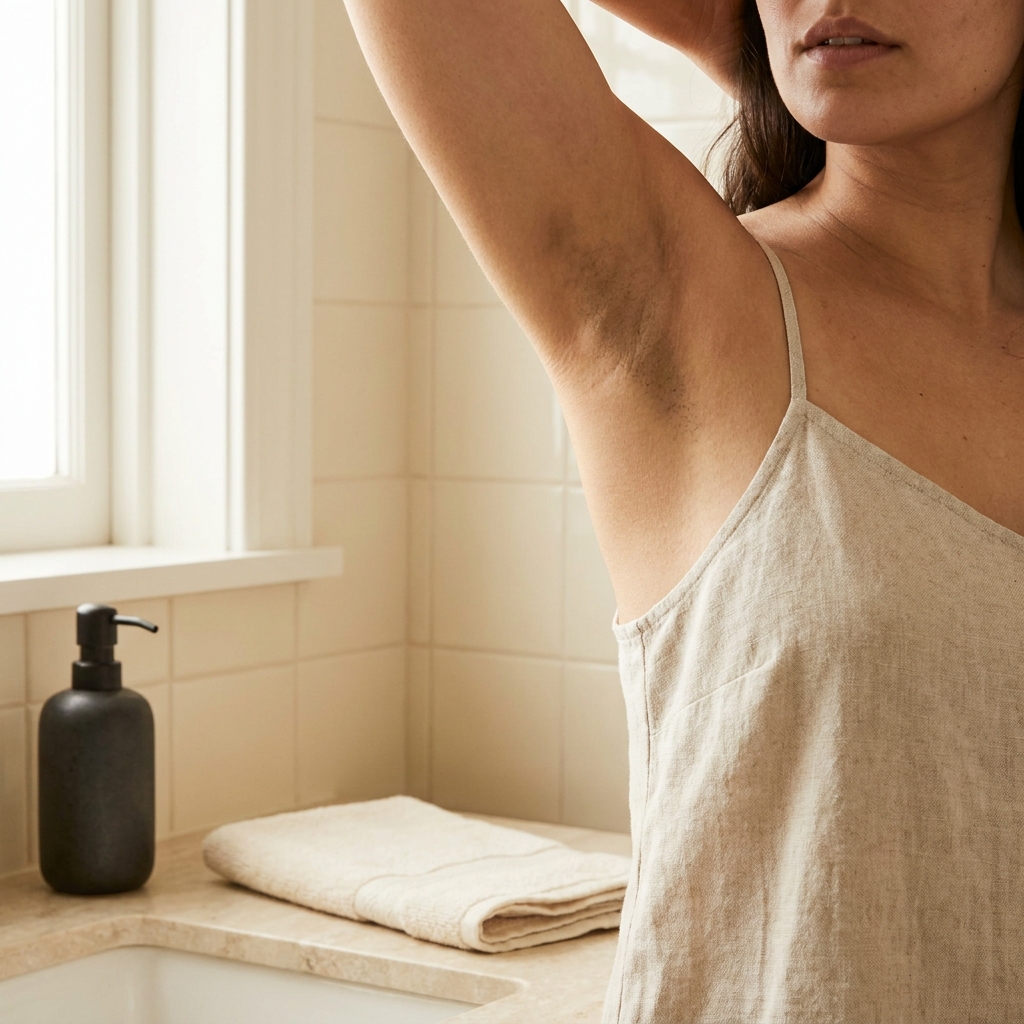
Why Your Underarms Look Dark — And What Actually Helps
"I shave every other day, I use deodorant, I've tried brightening products — so why do my underarms still look so dark and uneven?"
Key Takeaways
- Dark underarms are almost always caused by one or more of the following: friction, repeated shaving, deodorant buildup, dead skin cell accumulation, or post-inflammatory discoloration — not a sign of poor hygiene.
- Shaving removes hair at the surface but leaves the root visible under the skin, which can make underarms appear darker even immediately after shaving.
- Buildup from deodorant residue and dead skin cells adds to the appearance of darkness — regular clearing of this buildup is as important as any brightening treatment.
- Friction from clothing, bags, and repeated movement is one of the most overlooked causes of underarm discoloration, and it's ongoing — meaning the cycle keeps restarting without intervention.
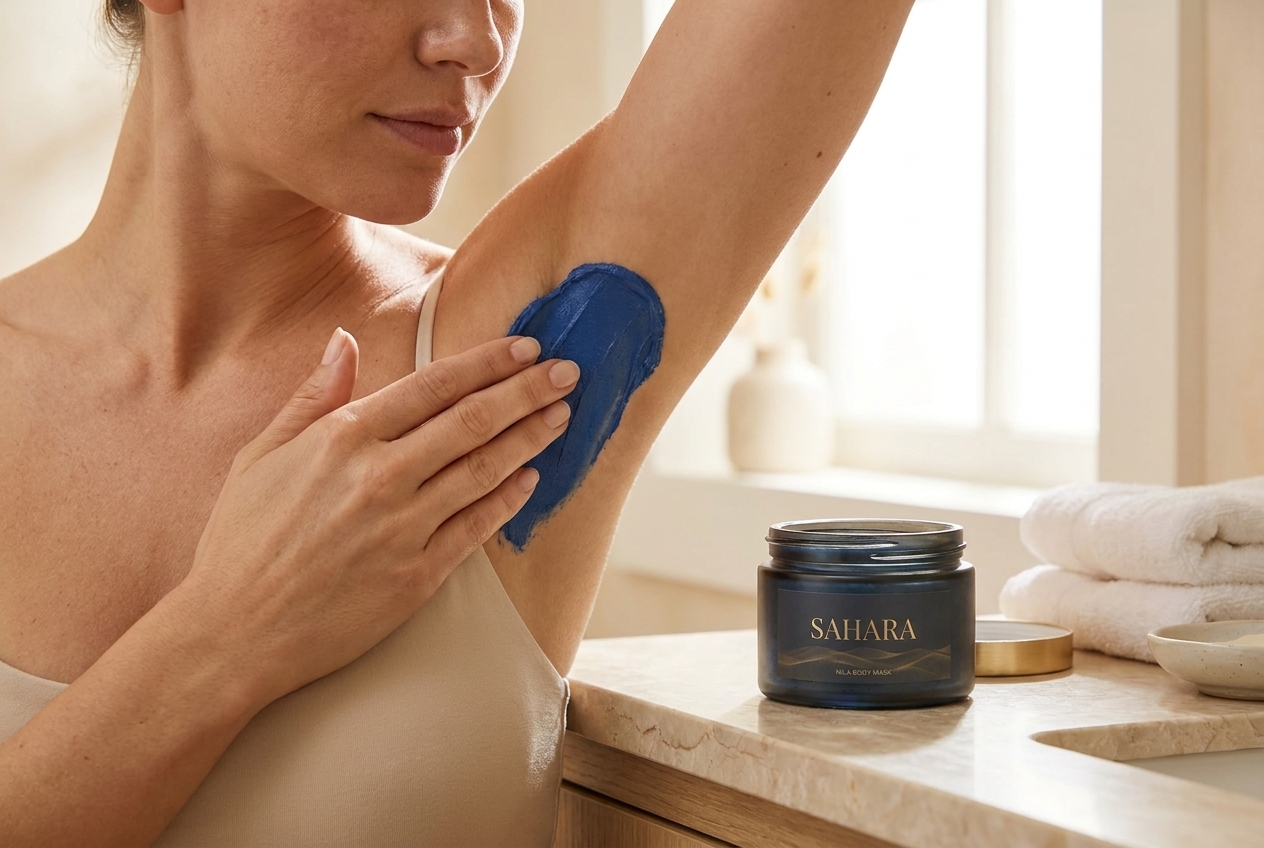
- The Sahara Nila Body Mask is designed specifically for body areas like underarms, helping remove buildup and support a more even, brighter-looking skin tone with consistent use.
- Results take time and consistency. Skin that has been subject to repeated friction, shaving, and buildup for years doesn't transform overnight — but it does respond to the right routine.
Dark underarms are one of the most common body skin concerns — and also one of the least talked about. If you've ever felt self-conscious raising your arms in a sleeveless top or swimsuit, you're far from alone. And you've probably tried a product or two that promised results but delivered very little.
The reason most of those products don't work isn't because your skin is uniquely difficult. It's because dark underarms have several overlapping causes — and addressing only one of them while the others continue will always feel like you're spinning your wheels.
This post breaks down exactly what's causing your underarms to look dark, why it's so persistent, and what a real body brightening routine actually looks like.
What's Actually Causing Dark Underarms?
Dark underarms are almost never the result of a single cause. In most people, it's a combination of factors working together — and each one compounds the appearance of the others.
Friction and repeated movement
The underarm area is one of the most friction-prone parts of the body. Every arm movement — reaching, carrying, walking — creates low-level rubbing between skin and clothing. Over time, this chronic friction triggers a low-grade inflammatory response in the skin, which stimulates melanin production as a protective mechanism. The result is gradual darkening of the skin in the friction zone. This is the same mechanism that causes dark knees, dark elbows, and dark inner thighs.
Shaving
Shaving is one of the biggest contributors to the appearance of dark underarms — but not for the reason most people think. Shaving removes hair at the skin's surface, but the pigmented hair root and follicle remain just below. On people with darker hair, this creates a visible shadow under the skin that makes the underarm look dark even minutes after shaving. On top of that, the repeated micro-irritation from blade contact stimulates melanin production over time, gradually deepening the appearance of discoloration.
Deodorant and antiperspirant buildup
Most conventional deodorants and antiperspirants contain aluminum salts, fragrance, and binders that don't fully rinse away with a standard shower. Over time, these residues accumulate in the skin's surface layer, mixing with dead skin cells and natural sweat to create a film that visually darkens the underarm area and makes the skin look dull, uneven, and rough to the touch.
Dead skin cell accumulation
The underarm area is warm, moist, and often covered — conditions that slow the natural shedding of dead skin cells. When these cells accumulate on the surface without being cleared away, they add visual depth to existing discoloration and make the area look darker and more mottled than it actually is underneath.
Post-inflammatory hyperpigmentation
Any repeated irritation — from shaving nicks, ingrown hairs, razor burn, or tight clothing — triggers an inflammatory response that leaves behind post-inflammatory hyperpigmentation (PIH). This is the same type of mark that a blemish leaves on your face. In the underarm, where irritation happens repeatedly, PIH builds up over time into a persistent, generalized darkening.
Why the Cycle Keeps Restarting
Here's why dark underarms are so frustrating to address: most of the causes are ongoing. You shave again. You apply deodorant again. Your arm rubs against your clothing again. Every day, the very actions that contributed to the discoloration in the first place continue — which means the cycle keeps getting reinforced while you're trying to undo it.
Step 1: Friction, shaving, and buildup create ongoing inflammation
Even on days you're not doing anything out of the ordinary, the underarm area is experiencing low-level repeated stress. This keeps melanin production mildly elevated and keeps the inflammatory cycle running.
Step 2: Buildup accumulates on the surface
Dead skin cells, deodorant residue, and environmental debris layer up on the skin's surface. This buildup sits on top of any existing discoloration and amplifies its appearance — making the area look darker than it is underneath and preventing any brightening product from fully reaching the skin.
Step 3: Brightening products work on top of the buildup — not through it
If you apply a brightening treatment without first clearing the surface, the active ingredients are working on dead skin and residue — not on the living skin below. It's the equivalent of painting over a dirty wall and wondering why the color looks off.
Step 4: The triggers never stop
You can't stop shaving, stop wearing deodorant, or stop moving your arms. So the triggers continue, and without a routine that actively clears buildup and supports skin renewal, the discoloration continues to deepen over time rather than improve.
The Sahara Nila Body Mask

Formulated with Moroccan Blue Nila and body-smoothing clays, the Nila Body Mask is designed for the body areas most prone to discoloration — underarms, bikini line, inner thighs, knees, and elbows. It helps remove surface buildup, absorb excess residue, and support a more even, brighter-looking skin tone with consistent use.
Shop the Nila Body MaskHow to Build a Dark Underarm Routine That Works
The key is addressing the cycle at every point — not just adding a brightening step on top of the same routine that's been causing the problem. Here's how to structure it:
Cleanse thoroughly — especially after deodorant use
Use a gentle body wash and take a moment to actually work the cleanser into the underarm area — not just a quick rinse. Deodorant residue is adhesive and doesn't come off passively. Thorough cleansing is the foundation of everything else.
Apply the Nila Body Mask 2–3x per week
After cleansing, apply an even layer of the Nila Body Mask to dry underarm skin. Leave on for 10–15 minutes. The formula helps lift away surface buildup — deodorant residue, dead skin cells, and accumulated debris — and supports a brighter, more even-looking underarm tone over time. Rinse thoroughly.
Moisturize after every shower
The underarm skin is thin and prone to dryness — especially after shaving and masking. Applying a lightweight body moisturizer after each shower helps keep the skin barrier supported and reduces the low-grade irritation that contributes to ongoing melanin overproduction.
Give your skin a break from shaving where possible
You don't have to stop shaving. But shaving less frequently — and always with a sharp, clean blade and a layer of shaving gel or body oil — significantly reduces the micro-irritation that drives ongoing post-inflammatory discoloration. Shaving on dry skin with a dull blade is one of the fastest ways to deepen underarm darkening over time.
What to Realistically Expect
Results vary. Individual skin type, starting discoloration, and routine adherence all significantly affect outcomes. Patch test before use. Do not apply to freshly shaved, broken, or actively irritated skin.
Common Mistakes That Keep Underarms Dark
What most people get wrong:
Frequently Asked Questions
Is it normal to have dark underarms?
Extremely common. Dark underarms affect people of all skin tones and are a normal result of friction, shaving, deodorant use, and natural skin cell behavior in a warm, covered area of the body. It's not a sign of poor hygiene or a medical concern for most people — it's just how skin responds to repeated low-level stress in that area.
Will the Nila Body Mask help lighten dark underarms?
The Nila Body Mask is designed to help improve the appearance of dark, uneven skin in body areas like underarms. It helps remove surface buildup, absorb residue, and support a more even-looking tone with consistent use. It is not a bleaching product and does not make unsupported lightening claims — but regular use as part of a clearing routine can support visibly brighter, more even-looking underarm skin over time. Results vary.
Can I use the body mask right after shaving?
No — wait at least 24–48 hours after shaving before applying the mask to the underarm area. Freshly shaved skin is more sensitive and vulnerable to irritation, and applying any mask directly after shaving can cause discomfort or further inflame the area. Apply the mask on non-shave days or the day after when skin has had time to settle.
How long before I see results on dark underarms?
Most people begin to notice a difference in surface texture and brightness after 2–4 weeks of consistent use. Visible improvement in deeper discoloration typically takes 8–12 weeks of regular masking combined with improved shaving habits and thorough cleansing. The more consistently the routine is maintained, the more visible the improvement over time.
Is the Nila Body Mask safe for sensitive underarm skin?
Patch test first — apply a small amount to the inner arm and wait 24 hours before applying to the underarm area. If your skin is reactive or you've recently experienced razor burn or irritation, wait until the skin is fully calm. Start with a shorter application time (5–8 minutes) and work up. Do not apply to broken or actively irritated skin.
Does shaving cause dark underarms permanently?
No — shaving-related underarm darkening is not permanent. The shadow effect from hair roots is structural and immediate, but the post-inflammatory discoloration from repeated shaving can visibly improve when the skin is given the right clearing and brightening routine and the irritation is reduced. Switching to sharper blades, using a shaving buffer, and masking regularly can all help the area look progressively more even over time.
Final Thoughts
Dark underarms aren't a hygiene problem. They're not a skin type problem. They're a cycle problem — and once you understand the cycle, you can start working with your skin to interrupt it rather than fighting it from the wrong angle.
Clear the buildup. Reduce the irritation. Give the skin what it needs to renew. The Nila Body Mask is built for exactly this — designed for the body areas that deal with chronic friction, buildup, and repeated stress, where most standard skincare never reaches.
Start the routine. Be consistent. Give it time. Your underarm skin is more capable of looking better than most products have ever given it credit for.
Brighten · Smooth · Protect